
Laser Hair Removal Neck
Neck (Front or Back) Laser Hair Removal

Neck Laser Hair Removal
Why Clients Choose Neck Laser Hair Removal
The neck is one of the most commonly treated areas for both men and women.
Men frequently seek treatment to reduce ingrown hairs, razor bumps, and the constant upkeep associated with shaving the front of the neck.
Treatment of the back of the neck can help maintain a sharper haircut and cleaner neckline between barber appointments.
Women often choose neck laser hair removal to address unwanted coarse hair growth on the front of the neck or to maintain a smooth, polished appearance on the back of the neck, particularly when wearing shorter hairstyles, ponytails, buns, or updos.
Front of Neck vs. Back of Neck Treatment
Beam's neck treatment pricing covers either the front of the neck or the back of the neck.
The front of the neck typically includes the area commonly shaved beneath the jawline and above the collarbone. The back of the neck includes the hairline and neckline area below the scalp.
Clients who wish to treat the entire circumference of the neck will require two treatment areas or two treatment packages.
If you're unsure which option is most appropriate, our specialists can help determine the best treatment plan during your consultation.
Is Neck Laser Hair Removal Effective?
Neck laser hair removal can provide significant long-term reduction of unwanted hair growth when the follicles contain sufficient pigment and texture.
The best candidates typically have:
- Very dark, coarse hair
- Dense or textured hair growth
- Frequent shaving irritation or ingrown hairs
Fine, light-colored, gray, white, blonde, or red hairs generally do not respond predictably to laser hair removal because they contain insufficient pigment and texture for the laser to effectively target.
How Many Treatments Will I Need?
Hair grows in cycles, and laser hair removal can only target follicles during specific growth phases.
Most clients begin with a series of treatments spaced several weeks apart.
Men often require additional treatments due to the influence of testosterone, which can stimulate ongoing hair growth throughout adulthood.
Maintenance treatments may be recommended depending on individual hair characteristics and long-term goals.
What Does Neck Laser Hair Removal Feel Like?
Most clients describe treatment as a quick snapping sensation similar to a rubber band against the skin.
Beam's advanced Candela GentleMax Pro Plus laser includes integrated Cryogen cooling technology designed to improve comfort during treatment.
The neck is generally considered a very tolerable treatment area, and sessions are typically completed within minutes Most clients find that each treatment becomes more comfortable over time, as the laser gradually reduces the amount of pigment (melanin) available in the hair follicle to absorb the laser energy.
Why Choose Beam Laser Spa?
Since 2007, Beam Laser Spa has specialized exclusively in laser hair removal. Our team has more than 30 years of combined laser experience and uses advanced Candela GentleMax Pro Plus technology to safely treat all skin tones, up to and including Fitzpatrick skin type 6.
Every treatment is performed by experienced laser specialists using customized settings designed to balance safety, comfort, and effectiveness.


Aftercare




Explore Other Laser Hair Removal Solutions
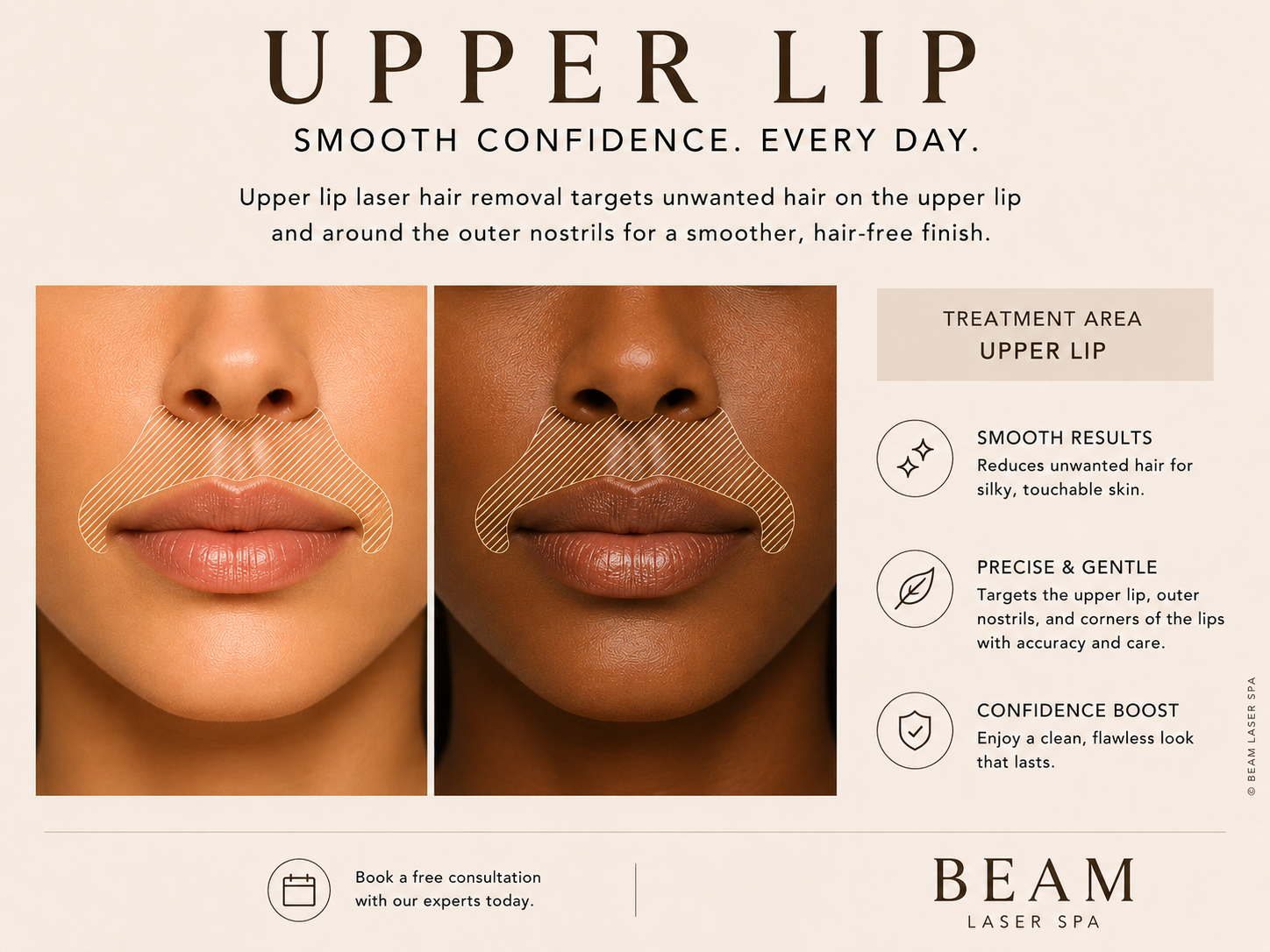
Upper lip laser hair removal targets unwanted hair on the upper lip and around the outer nostrils for a smoother, more polished appearance. At Beam Laser Spa, treatments are performed using advanced Candela GentleMax Pro Plus technology and can significantly reduce daily maintenance, ingrown hairs, irritation, and shadowing caused by unwanted facial hair.
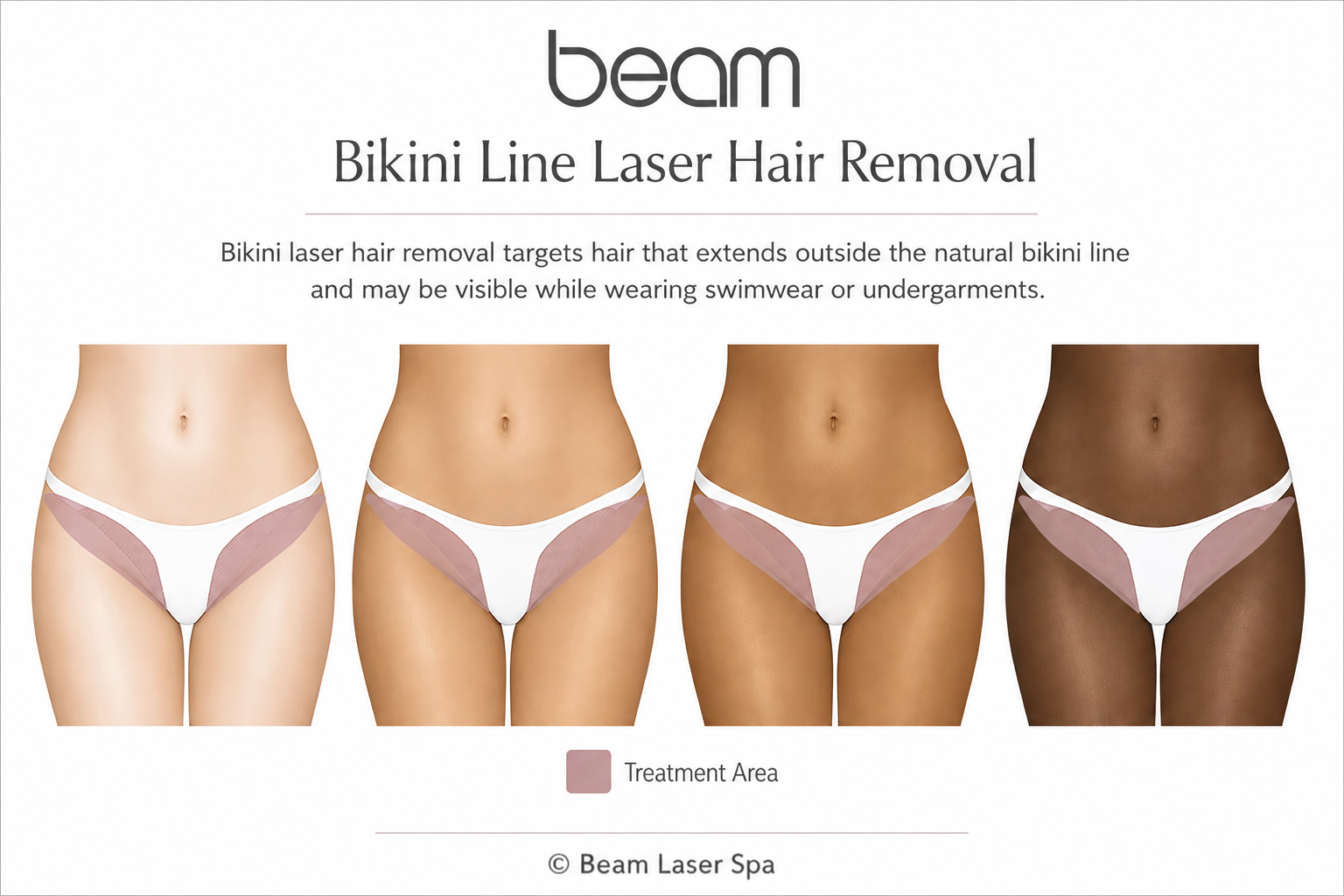
Bikini line laser hair removal is designed to keep the area neat and smooth, perfect for sensitive skin around this zone.

Happy trail laser hair removal targets unwanted hair extending from the navel to just above the belt line, typically in a strip approximately two inches wide. Larger happy trails may require additional treatment. This treatment is popular among men and women seeking smoother skin, reduced maintenance, and relief from ingrown hairs and shaving irritation. The most dramatic results are achieved when follicles are dark, coarse, and heavily pigmented. Fine, light-colored, gray, white, red, or peach-fuzz hairs are poor candidates and may respond minimally or not at all.
In its simplest form, the goal of laser hair removal is to selectively heat a target (hair) to the point of destruction without damaging the surrounding tissue (skin). Lasers work by delivering an intense beam of light that is absorbed by the hair. This light is converted to heat and targets the hair follicles while leaving the surrounding skin unaffected. By repeatedly targeting the hair follicles over a course of several treatments, typically 6-12, about 80% or more of the follicles will be disabled to the point that they can no longer produce hair.
Some clients may feel slight discomfort during laser pulses, similar to a rubber band snapping on the skin, which resolves in seconds and is mitigated by a burst of cold cryogen gas. Pain tolerance varies; some clients even fall asleep, while others are more sensitive. For sensitive clients, Beam uses lower settings, slower pulsing rates, or breaks up longer sessions into shorter appointments. Despite any initial discomfort, clients find the results—smoother skin, reduced hair density, and fewer ingrown hairs—well worth it.
Clients are attracted to laser hair removal because it is quick and total areas can be effectively treated in 6-12 treatments*, spaced 4 to 12 weeks apart, depending on the area of the body that is being treated. Usually faces are treated in shorter intervals, and body areas are typically treated 6-12 weeks apart. * It should be said that the average number of treatments needed is 6-12 per area treated. There is however, a variation from person to person depending on many factors, such as genetics, darkness and thickness of the targeted hairs, laser intensities used on the treatment, medications/supplements being used and pre-existing medical conditions. Therefore, some clients may respond to less than 6 treatments per area, while others may require more. Some medications and fitness supplements may CONTRIBUTE to increased hair growth, as may some pre-existing medical conditions A man’s back and a woman’s face often prove to be more challenging, and may take more than the average of 6-12 treatments.
The reason a series of 6-12 treatments is necessary for effective hair removal is due to the three phases of hair growth. At any given time, hair on the face or body will be in all three phases simultaneously. The laser used for hair removal only targets hairs in the Anagen phase, which is the active growth phase when hair contains an abundance of melanin to attract the laser. By targeting the Anagen phase consistently 6-12 times, with treatments spaced 4-12 weeks apart, we can successfully weaken over 80% of hair follicles, rendering them inactive or incapable of producing hair. The remaining 20% will become lighter in color and much finer.
Larger areas, such as arms, back, chest, and legs, will take 1 hour or less to treat. Smaller areas, such as the face, chin, lip, neck, and bikini line, will take 15-30 minutes or less. Clients often come in during their lunch breaks for a treatment and are able to comfortably return to work once the treatment is done.
Immediately following a laser treatment, clients may experience redness, bumpiness, and warmth on the skin (similar to the sensation of a strong sunburn). This reaction is completely normal and is known as follicular edema. It is the desired end-point of a laser hair removal session. This effect typically disappears within a few minutes to up to 6 or 7 hours, depending on the individual. However, Beam has a few clients with very sensitive skin who may remain red for up to 48 hours. For this reason, Beam takes a conservative approach: during the initial consultation, we prefer to conduct a small test patch on an inconspicuous area of the body and wait a few days to ensure the client does not experience any adverse reactions. Although rare, there is a risk of burning and scarring. Temporary itching or discoloration (hyperpigmentation or hypopigmentation) may also occur, which is more common in clients with skin types V-VI but can potentially happen with any skin type. A very rare response is the potential stimulation of new hair follicles.